

A walk through nature in spring carries the scent of the first buds and blossoms adorning fields, meadows, and forests. Wherever we go, we encounter a variety of wild plants usually referred to as weeds. Yet within these weeds lies a true treasure trove of health, as many wild plants are both edible and medicinal.
The walk doesn't have to be long, as many edible and medicinal species grow all around us, and some can even be found in our own gardens or yards. This means that foraging can also be suitable for people with limited mobility, especially since even short stays in nature are beneficial and healing. However, it is best to choose clean, natural areas away from roads, industry and other sources of pollution, because such herbs are safer and of higher quality.
When foraging for wild plants, it is important to keep in mind that there are both edible and poisonous species. However, many plants are distinctive enough that even beginners can identify them easily. When caution is combined with a love of nature, anyone can become a forager of wild edible and medicinal plants. Before setting off on a foraging walk, it is useful to know how to gather wild plants properly in spring:
- Spring is the season of young leaves. Young, tender leaves should be picked at the earliest stage when they are the most flavourful and richest in nutrients. After flowering, most leaves become bitter, tough, and harder to digest.
- After leaves come buds and young shoots, followed later by flowers in full bloom.
- The best time for foraging is during dry, stable weather, when the plants are of the highest quality.
Each season is unique in terms of the species that grow, how they are gathered, and the benefits they offer, yet the basic rules for safe and responsible foraging always apply. Once we know them, we can take an easy walk and discover what to forage in spring.
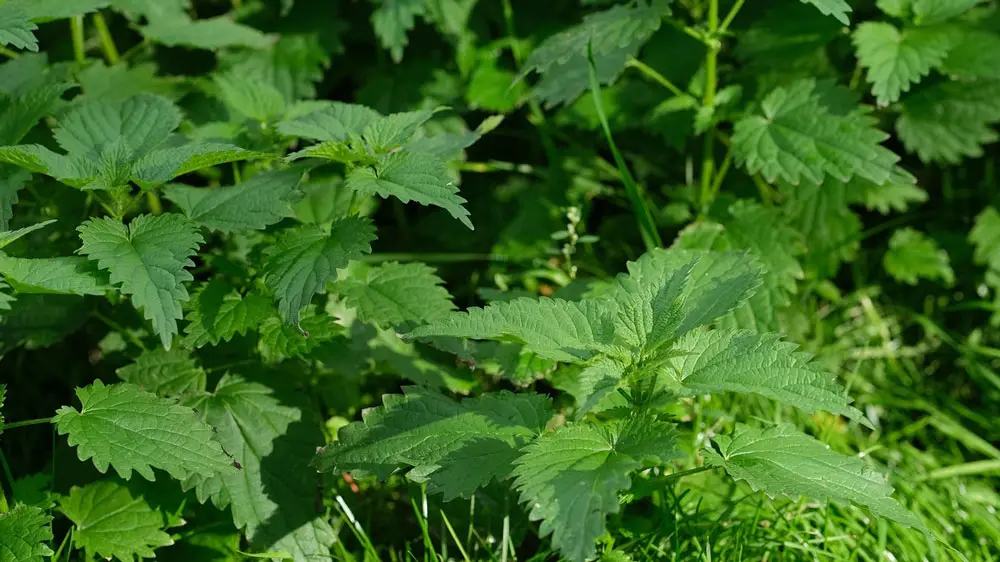
Nettle
lat. Urtica dioica
We don’t have to search far for nettles, it’s enough to walk along the edge of a meadow or a garden to come across their clumps. Seemingly an ordinary weed, this green-leaved plant with stinging hairs has a long history as a valuable medicinal herb. If you were ever stung by a nettle as a child, chances are an older folk reassured you that it was "good for you". Indeed, traditional gatherers have long believed in the healing power of the sting itself, claiming it boosts circulation and helps ease rheumatic aches. Nevertheless, to protect the skin, it is safest to pick nettles while wearing gloves.
Young leaves can be picked as early as February and prepared like a Swiss chard with potatoes or cooked in milk like spinach. They are also wonderful in pies, salads, soups and stews, or made into pesto. Before use, the leaves should always be briefly blanched. Fresh leaves can be added to smoothies or used to make a healthy nettle juice. Young leaves are packed with vitamins and minerals, including significant amounts of vitamin C, carotene, iron, and chlorophyll. Later, up until May and before the plant blooms, the tender tops (the first 10 cm) can be picked and dried for tea. Nettle tea is traditionally consumed for detoxification, blood cleansing, and strengthening the immune system.
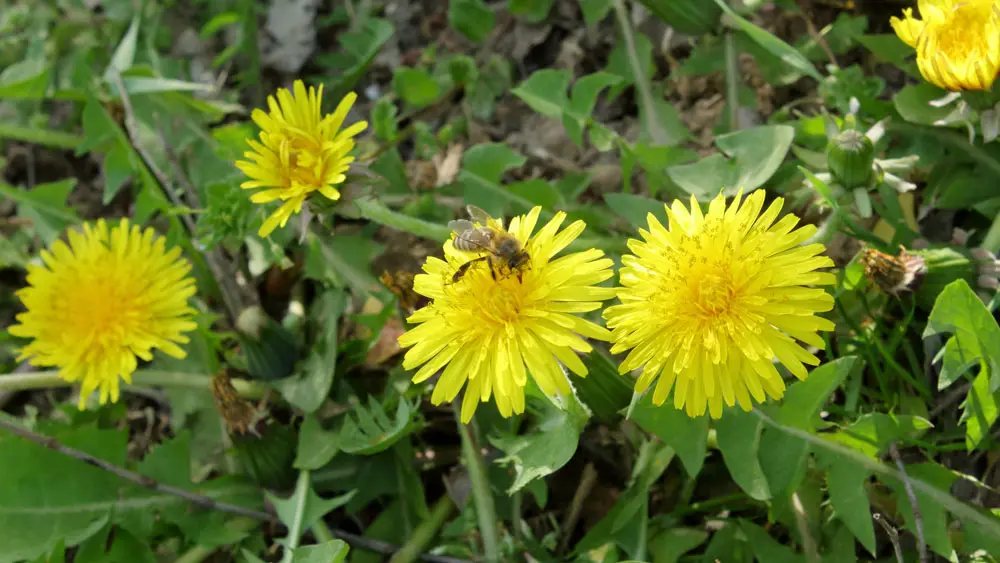
Dandelion
lat. Taraxacum officinale
Dandelions can be found everywhere, as soon as we lower our gaze to the grass. They grow on meadows and pastures, in parks and gardens, along roadsides and paths. It is one of the most widespread and well-known wild plants. The flower, yellow as the sun, and the long, lobed leaves are easily recognisable. There are several types of dandelions, with leaves that vary slightly in shape and size. But all of them are edible and medicinal, from root to flower.
Young dandelion leaves are picked from March to May, before flowering. They are best for salads, but also make a great addition to omelettes, soups, and stews. The young leaves are particularly rich in vitamin C, carotene, and iron. Dandelion roots are traditionally dug up in autumn, when they are considered most beneficial for liver health, but they can also be gathered in spring, before flowering, when they are richest in potassium. The roots can be cooked or eaten raw, and when roasted, they make a good coffee substitute. Once the first fully open yellow flowers appear, they can be picked, dried, and used for tea. Dandelion tea supports digestion, immunity, and gentle detoxification. Flowers can also be turned into dandelion honey, which is very similar in appearance and taste to real honey.
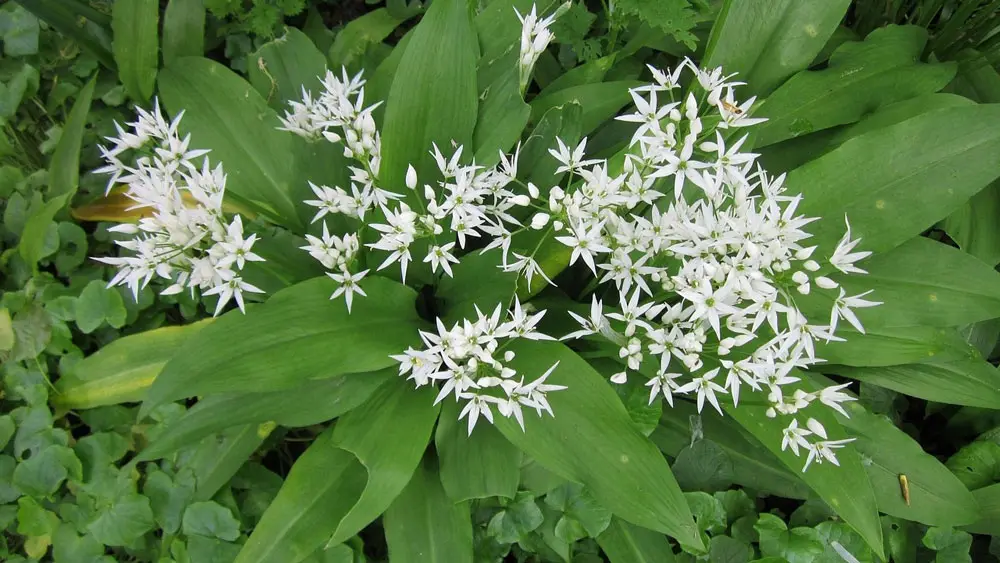
Wild Garlic
lat. Allium ursinum
If we venture into a deciduous forest, we may come across wild garlic, also known as bear’s garlic, ramsons, or wild leeks. According to folk belief, bears feast on this plant in spring. It grows in shady, damp areas, often along streams, rivers, and springs. Related to chives, onions, and garlic, it can be recognised by its long leaves and strong garlic scent.
Young wild garlic leaves can closely resemble those of lily of the valley, autumn crocus, and hellebore, all of which are highly poisonous. The key to identifying true wild garlic is its strong garlic scent, while the other plants have little to no smell at all.
Young leaves are foraged from March to May, before flowering. The leaves, bulbs, and later the flowers, make a flavourful addition to soups, stews, salads, and sauces. The pure white flowers have a delicate, gentle flavour and are especially decorative in salads. Wild garlic is best used fresh or lightly cooked, as prolonged heat or drying diminishes its distinctive flavor. Young spring leaves are especially rich in vitamin C and carotene. Like garlic, wild garlic may help lower high blood pressure and cholesterol levels.
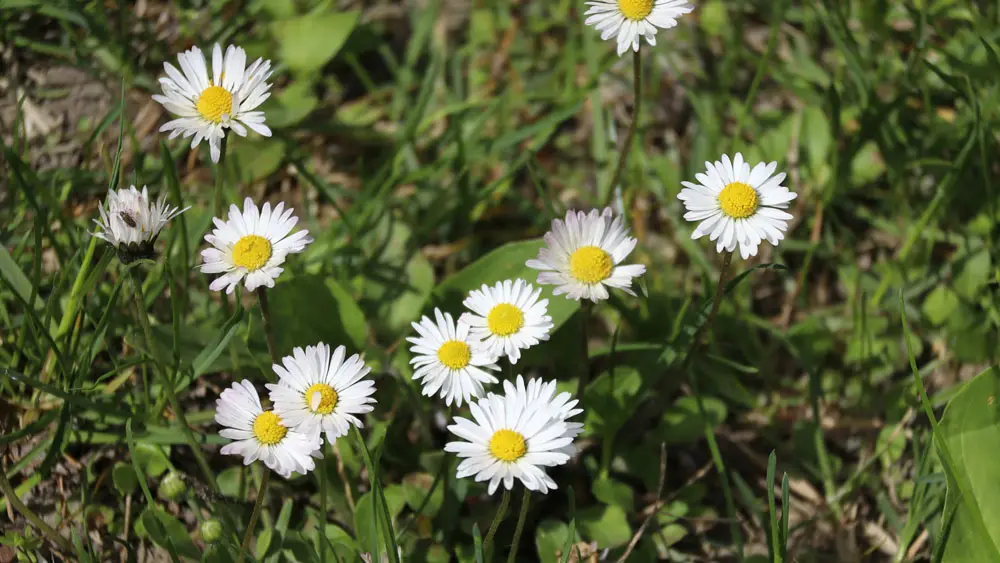
Daisy
lat. Bellis perennis
On a walk through sunlit meadows, we cannot overlook daisies. This charming little flower, with delicate white petals and a yellow centre, hides small, ovate leaves, arranged in a low rosette. You may have once counted their petals or woven them into flower crowns, unaware that they are edible and medicinal. This small, delicate blossom is not only very decorative but also offers numerous health benefits.
Young daisy leaves are picked from March to May and are excellent in salads. They can also be added to omelettes, soups, and stews, or mixed with cheese. The young leaves are rich in vitamins and minerals, particularly vitamin C, carotene, potassium, and calcium, while also containing significant amounts of iron. After flowering, the leaves and flowers can be made into fresh daisy juice or dried to make tea. Daisies have been used for centuries as a remedy for coughs, bronchitis, and other respiratory ailments. They have also been applied to treat wounds and soothe skin irritations.
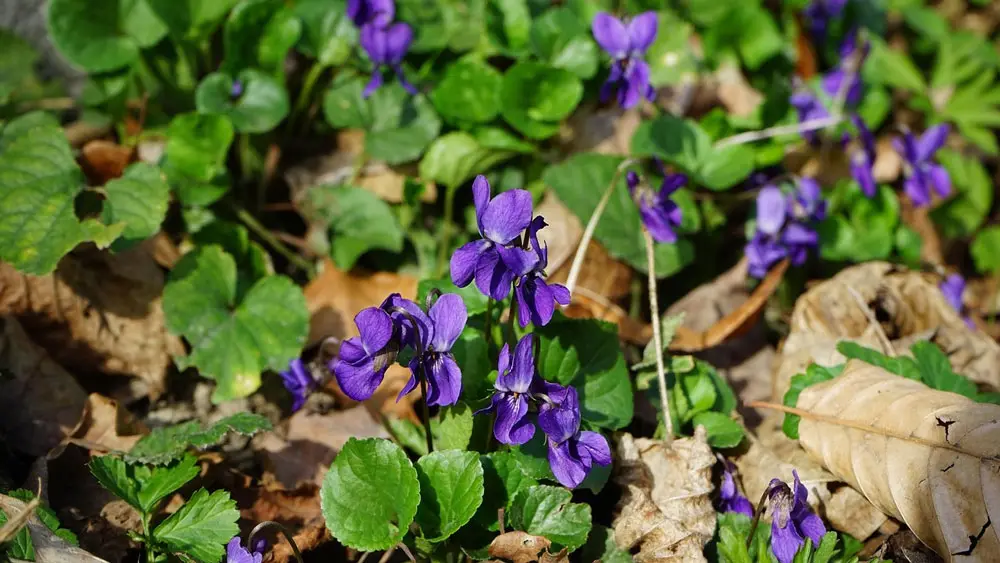
Sweet Violet
lat. Viola odorata
As we step into the gentle shade of meadows and woodland edges, we may discover the sweet violet. With its soft purple flower of five petals and its delicate, sweet scent, it is one of the quiet heralds of spring. Its oval leaves rest close to the ground, forming a graceful rosette. According to folk tradition, on Palm Sunday people wash their faces with violets and other flowers, symbolising spring renewal and the purification of the soul and body. Even angels are believed to wash in this fragrant water.
Violets can be gathered from March to May, beginning with the young leaves. As with any leafy green, they can be added to salads, soups, stews, and smoothies. The young leaves are rich in vitamins and minerals, particularly vitamin C and carotene. Violet flowers are also edible and they make a particularly lovely decoration for desserts. With their distinctive floral aroma and delicate colour, they can also be a charming addition to drinks like lemonade or infused water. Both the leaves and the flowers can be dried and used for tea. Violet tea has a calming effect and may help relieve headaches, migraines, and insomnia. It also has anti-inflammatory properties and was traditionally used as a remedy for coughs.
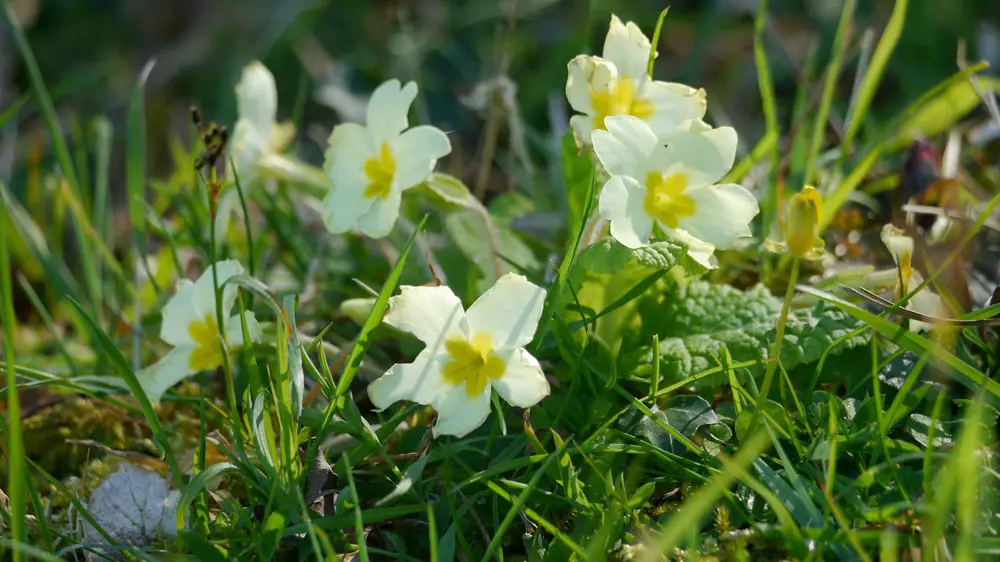
Primrose
lat. Primula vulgaris
On semi-shaded meadows and woodland edges, the primrose particularly stands out. There are more than 600 species of primroses, and not all are edible. When referring to the edible and medicinal type, it usually means the common primrose. It is characterised by pale yellow flowers with five petals, broad green leaves arranged in a rosette, and very low growth. This beautiful perennial can also be easily grown in the garden.
The primrose is one of the first heralds of spring, flowering from late February through April. Young primrose leaves are not particularly flavoursome, but they are very rich in vitamins and minerals, especially vitamin C. For this reason, they make a valuable addition to salads, soups, stews, teas, and other vitamin-rich drinks. The flowers are often used to decorate various dishes, especially desserts. In folk medicine, primrose has traditionally been used to relieve cramps, rheumatic pain, coughs, and inflammation. It can also be made into an ointment to treat skin wounds.
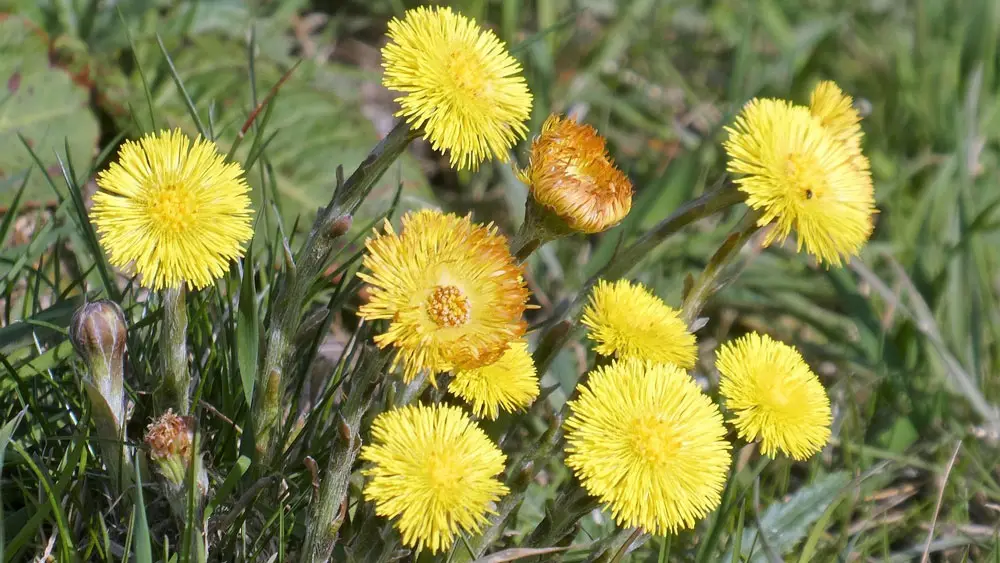
Coltsfoot
lat. Tussilago farfara
Even before the meadows turn green, along rivers, streams, and damp paths, coltsfoot surprises us with its yellow flowers. It is special because the flowers emerge from the soil first, while the young, rounded leaves appear later, making it easy to recognise in spring. Both the flowers and young leaves of coltsfoot are edible and medicinal, but only in moderation, as larger amounts may burden the liver.
Coltsfoot flowers can be picked from as early as the end of February until April, while the tender young leaves are most flavoursome from May to June. The leaves can be added in small amounts to salads, soups, and stews, or prepared like spinach. The flowers and leaves of the plant can also be dried for tea. Coltsfoot tea has long been known for its medicinal properties in relieving coughs and inflammation of the respiratory tract.
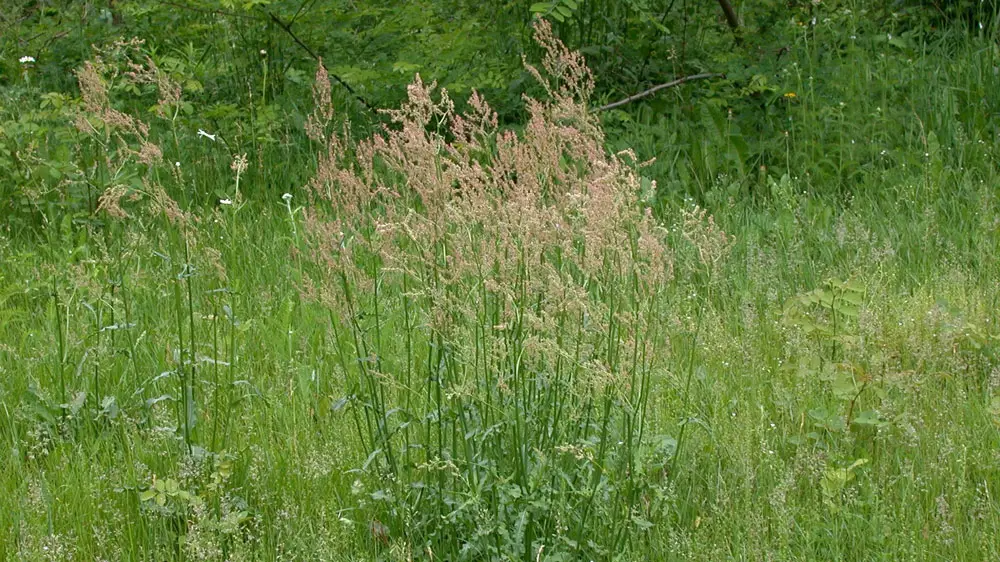
Sorrel
lat. Rumex acetosa
While walking in damp places, along streams and rivers, we can easily spot sorrel. It stands firmly and upright among meadow plants and can grow up to a metre tall. It has elongated, arrow-shaped leaves and small flowers, greenish to reddish in colour, gathered in panicle-like inflorescences. Sorrel is edible and medicinal, but excessive consumption should be avoided due to oxalic acid, which can be harmful to people prone to kidney stones.
As a vegetable, sorrel is valued for its fleshy, juicy basal leaves. They are best picked before the stem emerges, from March to May. As its name suggests, sorrel has a pleasant, sour, and refreshing taste. It is excellent in a variety of dishes, including soups, stews, sauces, and salads, and it also serves as a sour seasoning. Sorrel is not among the most nutritious leafy plants, but it contains moderate amounts of vitamin C, carotene, iron, as well as other vitamins and minerals. In traditional folk medicine, sorrel leaves were used as poultices for minor skin ailments.
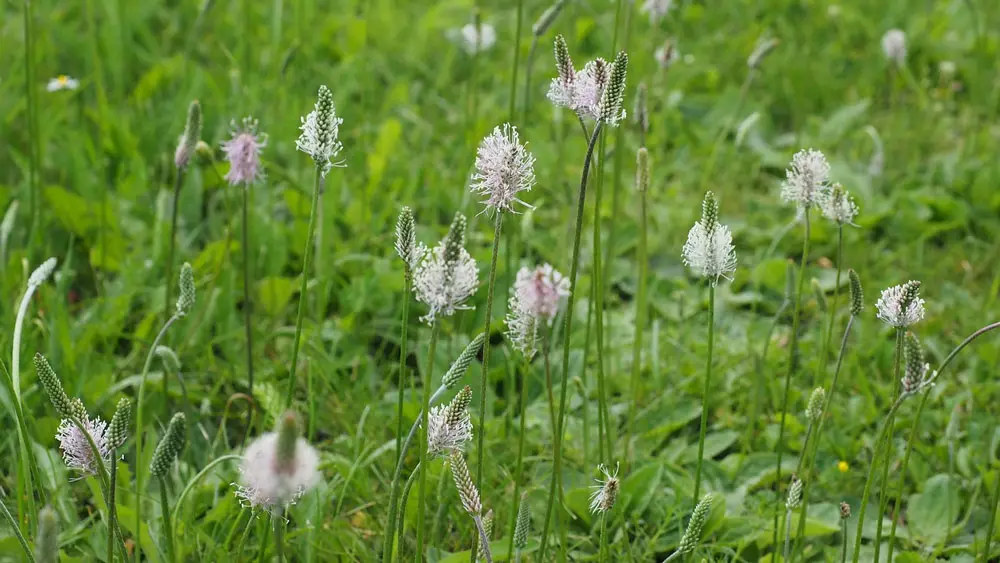
Plantain
lat. Plantago spp.
Wherever we turn, plantain is all around us. There are over 200 different species of plantain, but in our region the two most widespread are:
- ribwort plantain (narrow-leaf plantain),
- broadleaf plantain (greater plantain).
They are easy to recognise by their small flowers arranged in spikes and their connected basal leaves. Ribwort plantain has narrow, elongated leaves, while broadleaf plantain has broad, rounded leaves. Both species are valuable wild leafy vegetables.
The young leaves are picked from March to June, before the flower stalk develops. They can be added to soups and stews and are an excellent substitute for cabbage and kale. The leaves are not particularly tasty, but they are nutritionally valuable due to their high content of potassium, vitamin C and carotene. In folk medicine, leaf poultices have been used to aid wound healing and stop bleeding, while also offering antibacterial and anti-inflammatory properties. Tea made from the leaves is traditionally used for coughs and irritations of the respiratory tract. The seeds of plantain are also edible and have a mild laxative effect.
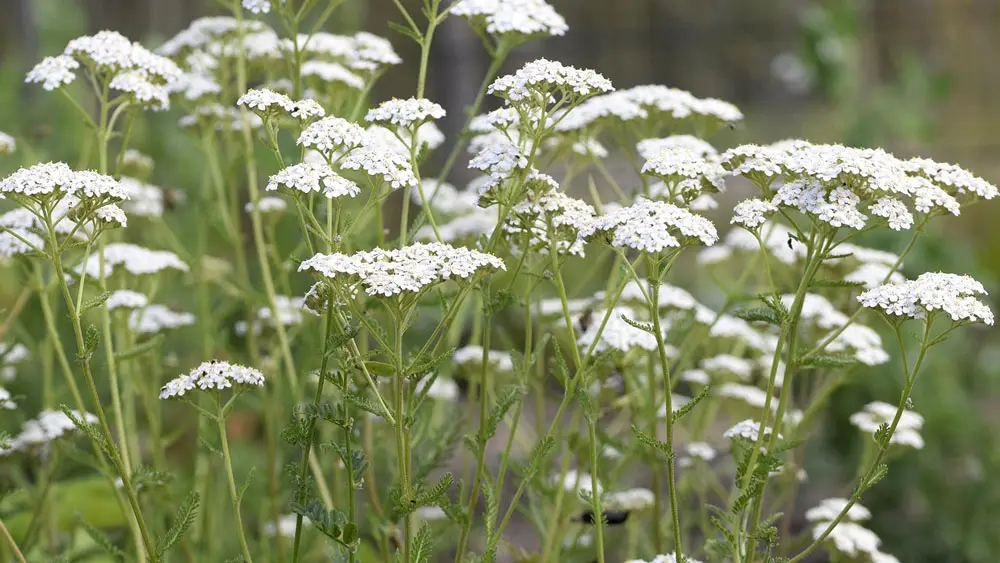
Yarrow
lat. Achillea millefolium
Among the diverse plants on sunny meadows, we cannot forget yarrow. It is characterised by an upright stem covered with soft woolly hairs and finely divided, feather-like leaves. The name Achillea comes from Achilles, the mythical hero who is believed to have used yarrow to heal the wounds of warriors. According to folk tradition, it was also used by outlaws, which is why it is often called “outlaw’s herb”.
The young spring leaves are picked from late February to June, and in summer both leaves and flowers are collected for tea. The young leaves have a mildly bitter taste and can be mixed into soups, stews, and salads. The flowers are particularly rich in essential oils, adding a characteristic aroma to any dish or drink. Aromatic yarrow tea is traditionally used to relieve digestive issues, colds and fever, and is especially considered beneficial for easing menstrual discomfort.
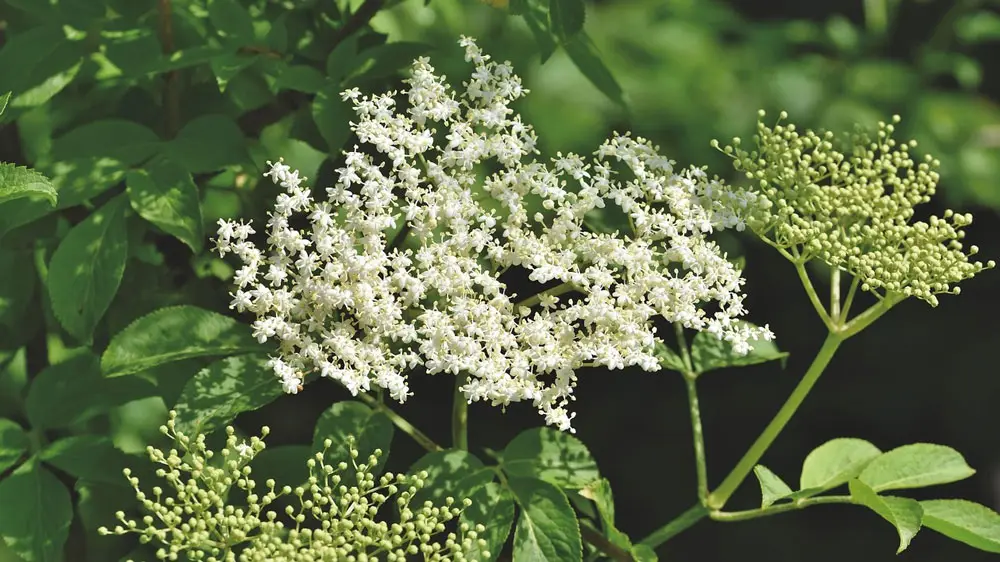
Elderflower
lat. Sambucus nigra
Towards the end of spring, the scent of elderflower leads us to sunny woodland edges and neglected meadows. It grows as a shrub or a small tree and in spring is covered with white flowers arranged in flat, umbrella-shaped clusters. Elderflowers are known for their sweet, aromatic fragrance that is both relaxing and soothing. In folk tradition, elder is considered a protector of the home and health, believed to help safeguard the garden and house.
The white elder blossoms are gathered from May to June, while the fruits, in the form of black berries, are harvested in autumn. The leaves and stems are poisonous and are not used for food. The flowers are most commonly dried for tea or used to make syrup, which in many rural households is known as elderflower cordial. There is also an old, rustic recipe in which elderflowers are dipped in pancake batter and fried. These fried flowers are particularly delicious when served with tea. Elderflower tea is best known for its traditional use in treating colds, coughs, and sore throats.

Birch
lat. Betula pendula
The slender, graceful birch can be spotted from afar. It prefers sandy soils and can be found in bright, dry meadows, along forest edges, on hills, and in mountain areas. Upright and elegant, with snow-white bark streaked with dark markings, its branches hang like delicate tassels. This beautiful deciduous tree has inspired artists for centuries. The silver birch is one of the most common and widespread birch species.
Since ancient times, people have known birch sap as a vitamin- and mineral-rich drink, collected from the trunk in spring. However, improper techniques and excessive tapping can easily damage the tree, so this practice is not recommended for beginners. The safest and simplest way for beginners to use birch is by making tea, using the buds and young leaves, which are harvested and dried from March to May. The buds and young leaves can also be added to salads, soups, and stews. They are rich in vitamins and minerals, particularly vitamin C, vitamin E, and carotene. Traditionally, birch tea is consumed to support urinary tract health, help with kidney stones, and relieve rheumatism.
Out in the sunshine and fresh air, it’s a joy to discover what to forage in spring. Gathering edible and medicinal wild plants is not only for the experienced, especially when choosing easily recognisable species. For deeper knowledge and easier identification, check reliable local sources. Guided by curiosity, caution, and a love of nature, enjoy your spring foraging!
Download the spring wild herb foraging calendar for free as a handy reminder of what to forage in spring.