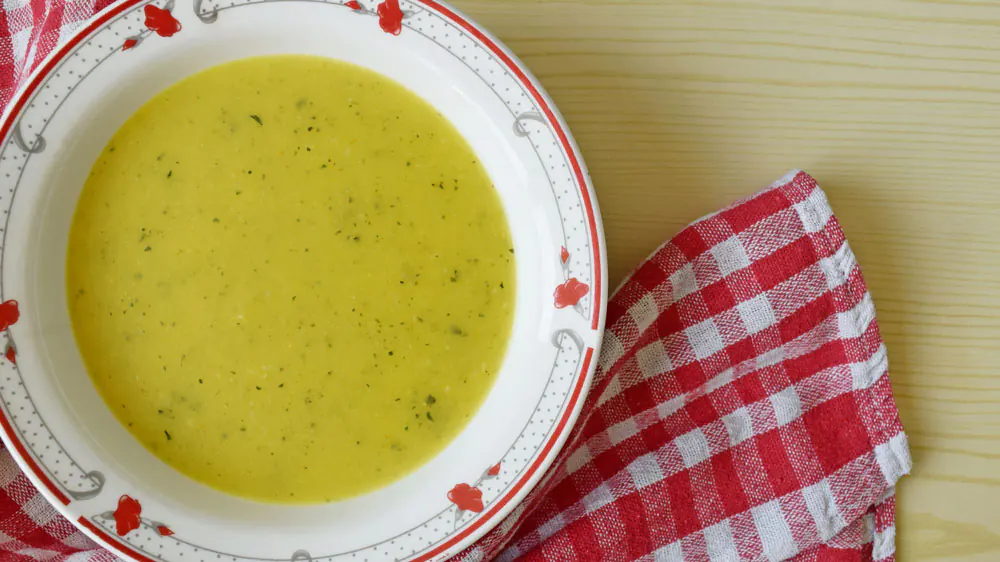
Some key characteristics of a delicious stew are its rich flavour, pleasant aroma, and perfect consistency. The consistency of a stew isn’t just about texture – it shapes the entire experience of the dish: its taste, mouthfeel, and the comforting emotion it evokes. A thicker texture also enhances the feeling of fullness, making a heartier stew a more substantial meal. When cooking healthily, there are several easy ways to thicken a stew without flour and without gluten.
1. Blending Part of the Stew
Blending part of the stew (known as pureeing in culinary terms) is a simple and natural method that doesn’t require adding any extra ingredients.
Easy steps:
- Scoop out a portion of the cooked vegetables along with a bit of the liquid.
- Blend it smooth using a blender, or mash it with a fork.
- Stir the creamy mixture back into the stew.
- Let it simmer gently for a few more minutes.
Pureeing helps the flavours meld together and gives the stew a smoother texture, while the whole ingredients (such as chunks of potato or beans) remain intact in the unblended portion. This technique works best with starchy, fibre-rich vegetables like lentils, beans, potatoes, sweet potatoes, and pumpkin, as cooking breaks down the starch which naturally thickens the stew. It also works well with softer vegetables, such as courgettes, cauliflower, and broccoli, which mash easily and create a lightly bound texture.
2. Potatoes
Potatoes are one of the most natural and readily available thickeners, so they deserve special mention. As they cook, potatoes soften and release starch, which naturally thickens the stew. Any stew with finely chopped or grated potatoes will thicken on its own. If you prefer a smoother texture without potato chunks, you can apply the pureeing technique.
Easy steps:
- Cook whole potatoes in the stew or in a separate pot of water.
- Remove the cooked potatoes and mash them with a fork or blend them into a smooth mixture with a bit of water.
- Add the mixture to the stew, stirring well.
- Let it simmer for a few more minutes.
For thickening stews, old and floury potatoes work best, as they are rich in starch, break down easily, and add body. New potatoes aren’t suitable, as they hold their shape and contain little starch.
For a medium-thick stew, the recommended ratio is 100–150 g of potatoes per litre of liquid. Besides adding thickness, potatoes are rich in fibre, which enhances the feeling of fullness and satisfaction. They have a neutral flavour, so they won’t significantly change the aroma of the dish. This method is ideal for thick soups, stews, goulashes, and vegetable sauces.
3. Beans and chickpeas
Two legumes – beans and chickpeas – also stand out as excellent natural thickeners. They’re packed with complex starch and plenty of soluble fibre, which give stews a fuller mouthfeel. Because of their tough skins, the starch and fibre don’t have a thickening effect when they are whole. To achieve the desired effect, beans and chickpeas must always be pureed.
Easy steps:
- Mash the cooked beans or chickpeas with a fork or blend them into a smooth mixture with a bit of water.
- Add the mixture to the stew, stirring.
- Simmer for a few more minutes.
If you're making a stew with beans or chickpeas, you can take a portion of the cooked legumes, puree them, and stir them back into the dish. For other stews, you can use canned beans or chickpeas. To achieve medium thickness, the recommended ratio is 100–150 g of beans or chickpeas per litre of liquid.
White beans are the most neutral and creamy, but other types of beans are also good thickeners.
Beans and chickpeas add thickness while providing a wealth of protein, fibre, and minerals, significantly boosting the nutritional value of stews. Pureed beans or chickpeas work best in dishes that are already rich and filling. These include thick stews with whole grains such as buckwheat and barley, as well as winter stews packed with root vegetables like celeriac, parsley root, and carrots.
4. Red lentils
Red lentils are another legume rich in complex starch and soluble fibre, which naturally thickens dishes.
Easy steps:
- Add a cup of dry red lentils to the stew and stir well.
- Cook for 15 minutes until the lentils break down and blend into the stew.
The advantage of red lentils over beans, chickpeas, and other types of lentils (green, brown, black) is that they require less cooking time. They break down quickly and turn into a puree, naturally thickening the stew without the need for additional blending.
For a good thickness, about half a cup of dry lentils (70–100 g) per litre of liquid is enough. Like other legumes, red lentils are high in protein, fibre, and minerals, which enhance the nutritional value of the stew. Red lentils do not overpower the flavour of the dish, making them easy to fit into various stew recipes.
5. Rice and rice flour
Rice is another naturally starchy food that helps bind the ingredients and create a thicker, creamier texture. To thicken a stew, you can use whole rice grains or rice flour.
Rice grain
You can add a handful of rice directly to the stew. The rice will absorb some of the liquid and swell, naturally thickening the dish. If you prefer a smoother texture, it should be pureed using the familiar method. Cooked, blended rice works similarly to pureed vegetables – it blends seamlessly into the stew and creates a natural thickness without lumps.
Easy steps:
- Cook the rice separately or use leftover rice.
- Blend the cooked rice into a smooth mixture with a bit of water, preferably using a blender.
- Stir the mixture back into the stew.
- Simmer for a few more minutes.
Rice flour
When it comes to thickening without flour, we usually think of regular wheat flour. However, there are also gluten-free alternatives like rice flour, which thickens evenly and smoothly, creating a nice, soft texture. It's used just like wheat flour, making it a quicker and simpler method.
How to do it:
- Mix 1–2 teaspoons of rice flour with 100 ml of cold water.
- Towards the end of cooking, add the mixture to the stew, stirring constantly.
- Simmer for another 5–10 minutes until the stew thickens.
Rice flour is used just like regular wheat flour.
To achieve a medium thickness, use 60–100 g of whole rice or 2 tablespoons of rice flour mixed with 100 ml of water per litre of liquid. Rice is mild, easily digestible, and naturally gluten-free, while also enriching the stew and making it more filling. Its neutral flavor makes it perfect for thickening almost any kind of stew – whether made with vegetables, legumes, or meat.
6. Oat flakes
Oats are an excellent natural thickener thanks to their complex starches and fibers – especially beta-glucans, which naturally create a slightly creamy, thickening texture. They’re very easy to use, as they cook with the dish, quickly absorb liquid, and thicken it.
Easy steps:
- Add a handful of oat flakes directly to the stew and stir well. For subtler thickening and a finer texture, grind the flakes before adding them.
- Simmer for a few minutes until they soften and thicken the dish.
Oatmeal has a high absorbency, so don't add too much, or the dish will become mushy. For a medium thickness, 3–4 tablespoons (30–40 g) of oats per litre of liquid is enough.
Oats are known for being rich in fiber, protein, vitamins, minerals, and antioxidants, so they nutritionally enrich any dish. They don’t overpower the flavor, making them easy to fit into various vegetable stews and creamy soups.
7. Arrowroot powder
Arrowroot powder is a more exotic but natural gluten-free option for thickening soups and stews. It consists of natural starch extracted from the tropical plant Maranta arundinacea. As a minimally processed, natural ingredient, it is highly valued in gluten-free, vegan, and paleo diets. It can be found in health food stores.
Easy steps:
- Dissolve a teaspoon of arrowroot powder in a cup of cold water.
- Towards the end of cooking, add the mixture to the stew, stirring constantly.
- Cook for a few more minutes.
For a medium thickness, it is recommended to use 2–2.5 teaspoons (6–8 g) of arrowroot powder per litre of liquid. Arrowroot powder is mild and easily digestible. It has no taste, so it doesn’t alter the flavor of the dish. Unlike other starches, it doesn’t cloud the liquid, making it ideal for clear soups, sauces, and stews.
Flavour and aroma shine best in a well-thickened stew. Whatever ingredients you have on hand, there’s always an easy way to thicken a stew without flour. All the thickeners listed are naturally gluten-free and generally well-tolerated. Experiment to find your favourite combination. You can try some of the natural thickening methods in the following soups and stews:
Bon appetit!